
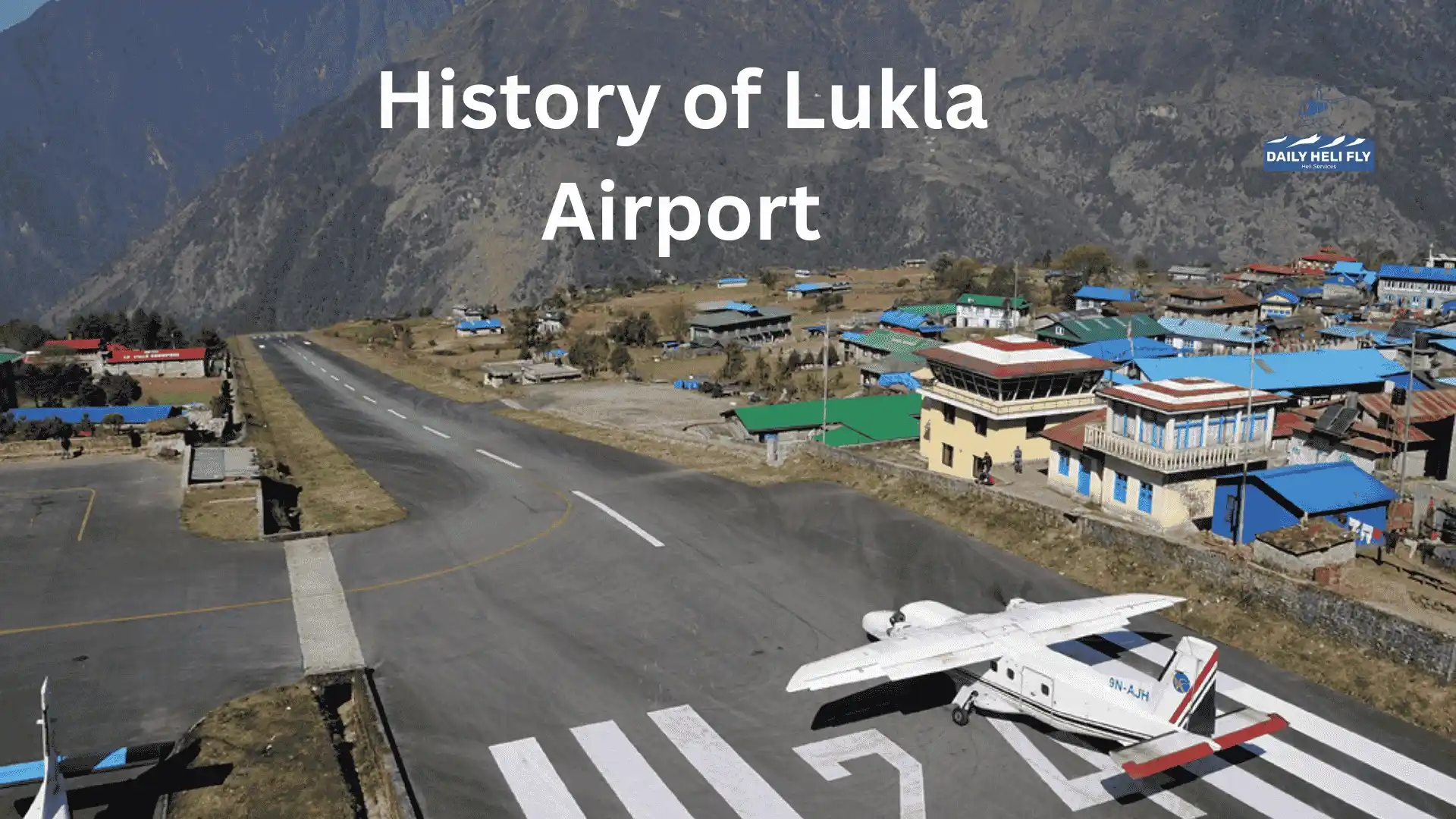
Lukla Airport is located in the core of the Himalayas, and it has become the center of attention of a number of travelers, mountaineers, and even historians. Its treacherous pathway with such high mountains is not only a way to the great Everest but also a call to human resourcefulness and bravery. The History of Lukla Airport provides an insight into how a small piece of land that is remote has changed the nature of adventure tourism in Nepal.
To this day, the Lukla Airport story is something to marvel at, with its rugged landscape and adventurous landing and take-off procedures being very exciting yet crucial to the Himalayan expeditions in Nepal. To the visitors interested in viewing the entrance into Everest, the airport signifies the fine line between danger, beauty and adventure.
The Early Years – Before Lukla Airport was a Thing
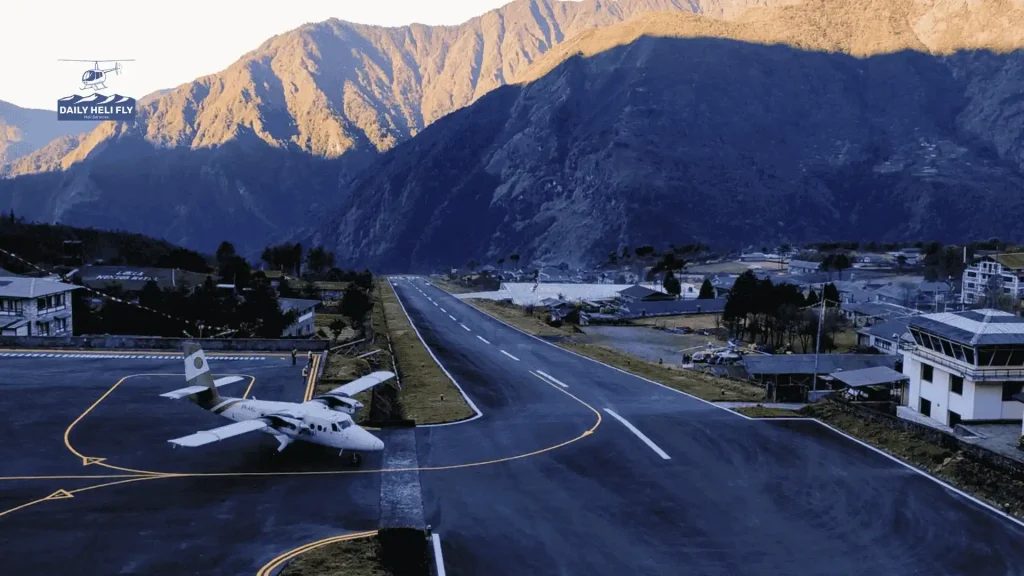
There was a time when the trip to Everest was not an easy one before the existence of the airport. Traders and trekkers would take days of their lives on mountainous paths and dangerous passes. The Himalayas were great and ominous, with snow-covered cliffs and unpredictable weather.
How Trekking to Everest Looked Before 1964
- It was a five to seven-day walk to Lukla by Trekkers.
- The supplies had to be walked through or carried by pack animals.
- Bad weather frequently caused slowness in the walks or hazardous conditions.
The history of Lukla Airport starts here, there was a need to have a solution to connect the remote villages of Khumbu to the rest of the world.
The Need for an Airstrip in the Khumbu Region
The Nepalese government and pioneers in mountaineering realized that there was a dire need to have an airstrip that would help in transportation, supply delivery, and emergency evacuation. An airstrip would not only reduce the time of travelling but also improve the safety of the trekkers and locals.
Sir Edmund Hillary’s Vision for Connecting Sherpa Communities
Sir Edmund Hillary, who was among the first men to reach the summit of Everest, saw a united Khumbu region. In addition to mountaineering, he desired accessibility by locals, teaching, and medical assistance. His imagination is the foundation of Lukla Airport, and therefore, he was a significant part of its History of Lukla Airport.
Building the Impossible — The Construction Story
To build an airport on one of the most rugged landscapes in the world was not a small task. Engineers had to struggle with steep mountains, valleys, and unpredictable weather in the Himalaya.
Why the Original Flat Land Got Rejected
First, there were proposals to construct the airstrip on flat farmland close to Lukla. The local landowners did not, however, agree to sell off their land. The route was diverted to a steep mountain slope – a move that has made Lukla Airport a one of its kind and the most famous trouble.
Choosing a Steep Mountainside Instead
It was constructed in a secluded spot with the side of a mountain and made a runway of 12% incline, which was considered an engineering wonder at the time. Each landing and takeoff would require accuracy, thereby becoming a legend among pilots.
Local Sherpa Involvement and Hillary’s Leadership
The development of the airport was based on the work of Sherpas, which was led by Hillary. This combination of the local experience and the foreign experience gave life to a project that would have been impossible to bring into reality.
The First Unpaved Runway: What Flying Was Like Back Then
The runway, which was finished in the year 1964, was unpaved. Pilots were exposed to dust and loose gravel, and high elevations. However, Lukla Airport was the salvation of both climbers and locals despite these threats.
The 2001 Transformation — When Lukla Received Its Paved Runway
Towards the turn of the millennium, Lukla Airport had grown increasingly busy, and its unpaved runway was unsafe. It was eventually paved in 2001, and this has brought in a new era of reliability and comfort to the travelers.
Why the Upgrade Was Needed
- A higher air traffic demanded improved infrastructure.
- Security issues due to the high frequency of accidents on the unpaved road.
- Wish to promote the increasing tourism in the Everest.
Impact on Safety and Flight Frequency
The tarmac also minimized accidents, enabled more frequent flights, and increased passenger confidence. Helicopters already in operation were made more efficient to go hand in hand with fixed-wing planes.
How the Paving Changed Himalayan Tourism Forever
This has enhanced Lukla Airport to become a world center. The trekking was made available to more tourists, emergency evacuations took a shorter time, and the airport became part of the Nepalese tourism narrative.
Honoring Legends — Renaming It Tenzing-Hillary Airport in 2008

In 2008, the airport was finally renamed to Tenzing-Hillary Airport in honor of the pioneering men who conquered Everest. This renaming was not a mere formality, but it glorified the spirit of adventure and human courage.
Why Tenzing Norgay and Sir Edmund Hillary Deserve the Honor
Tenzing and Hillary are the embodiments of persistence, courage, and adventure. Their contributions to mountaineering, as well as local communities, were everlasting through renaming.
The Symbolic Value Behind the Renaming
It is the success on the international level as well as the pride of the locals, a combination of cultures, and a part of Nepal in the world in terms of adventure tourism.
How the Label “Gateway to Everest” Became Widely Known
As the media publicized and the popularity of trekking increased, Lukla Airport became a household name with regard to Everest expeditions. The airport already had a legendary status, and travelers started referring to it as the gateway to Everest, which brought even more charm to it.
What Makes Lukla Airport So Unique Even Today
Lukla Airport remains a mystery to the traveller, pilots, and historians, as it is a very rare occurrence of place, engineering, and danger.
The Extremely Short Runway (527 m)
The runway is not very long at only 1,729 feet, and this requires pilots to make accurate landings each time.
The 12% Runway Incline — A Rare Engineering Feature
The Lukla slope, in contrast to the flat ones, allows the airplanes to stabilize upon landing, but makes the landing process more complex.
High Altitude Challenges at 2,846 m
Lighter air has a repercussion on aircraft lift and engine performance, which creates strain with any flight.
Surrounded by Mountains — A Narrow Himalayan Bowl
Mountain walls and steep cliffs do not even give a chance to make a mistake. The pilgrims fly through an ecological track cut through the Himalayas.
Unpredictable Weather That Changes in Minutes
Sudden winds, snow, and fog tend to postpone flights and keep both pilots and passengers in suspense.
Lukla’s “Dangerous Airport” Reputation — Fact or Exaggeration?
Lukla Airport has been dubbed by the international media as one of the most hazardous airports across the globe. Although to some extent, the risk is alleviated by modern aviation standards and qualified pilots.
Why International Media Calls It the World’s Most Dangerous Airport
- Short, inclined runway
- Mountains that are steep around.
- Sudden weather changes
Actual Safety Procedures and Pilot Requirements
Special certification is required for pilots; they should only fly in clear weather, and there are strict procedures that they are expected to adhere to, minimizing the chances of accidents.
Weather Restrictions and Visibility Protocols
The flights are mainly made during the early morning when the weather is more predictable, and hence the risk is minimized.
Improvements Made Over the Years
- Paved runway
- Better air traffic control
- Improved weather prediction.
Lukla Airport’s Role in Modern Himalayan Tourism
Nowadays, Lukla Airport is the hub of the Nepalese tourism economy, connecting trekkers, climbers, and adventurers to the Everest area.
Why It’s the Starting Point for Everest Base Camp Treks
Trek itineraries frequently start at Lukla, so it is a logical place to start with the Everest adventure.
Economic Lifeline for Sherpa Communities
The local Sherpas have jobs, infrastructure, and international exposure through tourism.
How Lukla Changed the Scale of Nepal’s Adventure Tourism
A few of the mountaineers had tried Everest before Lukla. There are now hundreds of trekkers every season, making Nepal even larger in terms of world tours.
Lukla Airport vs. Helicopter Access — What Has Changed?
Helicopters have provided an alternative to the difficult flights using fixed wings into Lukla, which is much safer.
Why Helicopters Are a Reliable Alternative During Poor Weather
- Can land in smaller areas
- Quick evacuation options
- Adjustable timing of tourists.
The Shift Toward Helicopter Flights for Safety and Convenience
Increased preference is towards helicopters by the travelers due to their comfort, reliability, and aesthetic value.
Why Many Travelers Choose Heli Evac or Heli Return Instead of the Plane
- The weather should not be a problem with a long waiting time.
- Reduced exposure to risk
- Quicker access to perspectives of Everest.
Conclusion — Lukla Airport’s Legacy and Its Future Ahead
The history of Lukla Airport is not a history of dates and facts; it is a story of boldness, innovation, and the desire of humankind. Since the early days of the unpaved landing field to a paved landing field, which transformed Himalayan tourism, Lukla Airport remains the entry point to the Everest and the epicenter of adventure in Nepal.
Helicopters are now the supplement of Lukla Airport to the modern-day traveler; they are safe, convenient, and have amazing Himalayan views. The airport is still a reminder of what man can attain even under the most difficult conditions.


