
Does your bucket list consist, of trekking to the mighty Annapurna Base Camp (ABC)?
Undoubtedly the pinnacle grants you an amazing and stunning glimpse of echoing mountains, making the trip exciting and all worth it!
However, before gearing up and lacing up your thick adventurous boots, for a trek or for a helicopter tour, being aware of altitude sickness in the Annapurna area and how it may be a potential threat is crucial!
Altitude sickness shows up in as high as 75% of trekkers, although the intensity may vary.
Identifying Altitude Sickness While Annapurna Base Camp
Altitude sickness, or acute mountain sickness (AMS), is a condition that appears as an individual ascends greater elevations and heights at a rapid pace, in the absence of acclimatization.
There’s less and lesser oxygen in the air as the elevation increases which the only approach is your body adapting to the height. You might notice symptoms like:
- Headaches
- Feeling nauseous
- Dizziness
- Trouble sleeping
- Not feeling hungry
Some people might just feel a bit off, while others could have more severe reactions.
The Challenge of Annapurna Base Camp: What To Expect

Annapurna Base Camp is at a grand altitude of 4,130 meters (13,549 feet). At such an elevated climbing activity, the chance of altitude sickness rapidly rises immensely. The appearance of symptoms can be noticed as low as the 2,500-meter count onwards. Keeping track of your health and breathing is vital here.
Several factors can increase your chances of experiencing altitude sickness:
- Climbing too fast without allowing your body to acclimatize
- Not drinking enough fluids
- Ignoring early signs of AMS
- It is mandatory to agree to your body’s signals/acclimatize and adapt accordingly
Tackling And Treating Altitude Sickness
Focusing on prevention is the wisest decision here throughout your trek. A beautiful blend of responsibility and enjoyment makes ABC’s trip a successful one. Here are some practical tips:
Take Your Time and ascend gradually so your body can adapt. Likewise, staying hydrated and filtering the system with a sufficient amount of water frequently.
Acquiring quality rest when needed helps you plan for extra days to acclimatize. Also, a nutritious approach whereby foods and drinks packed with ample energy and nutrition should be carried out during the trek.
Find all the essential information on the diets for altitude sickness you should pack for your journey.
Staying away and clear from alcohol helps the body stay in balance and senses as the intake of alcohol and smoking can worsen dehydration. Lastly, talk to your doctor about bringing medications like Diamox, if necessary.
How To Tackle And Treat Altitude Sickness
In case you or your travel companions feel a deterioration in health or start feeling uneasy, here’s your guideline for what you can do:
Stop and rest don’t go higher until you feel better. Descending immediately if symptoms start to amplify rapidly, heading down to a lower altitude is uncompromisable.
Keeping the body warm keep the body warm by rubbing your hands and feet, appropriate clothing, and fluid intake is a great approach.
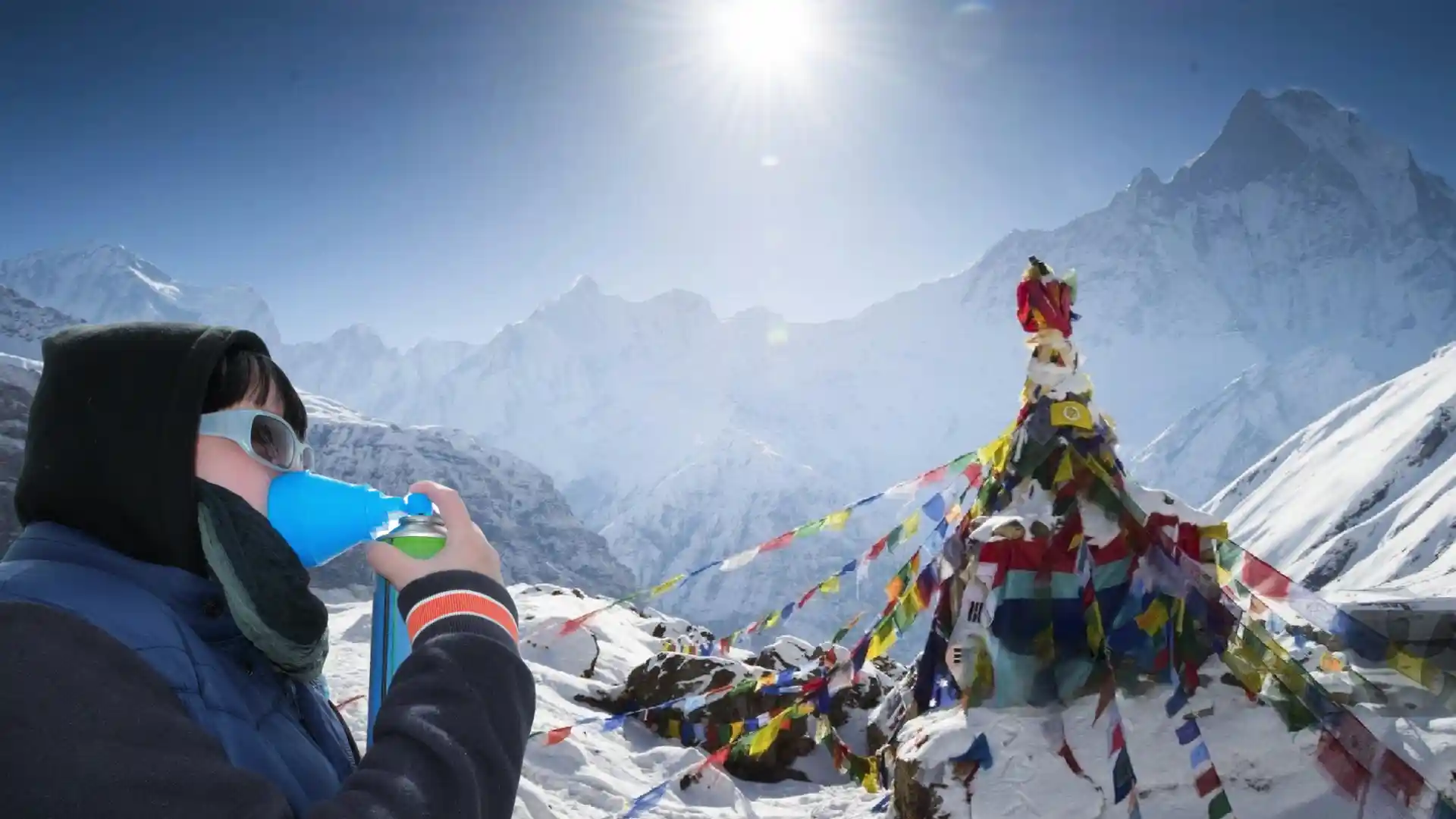
Similarly, supplemental oxygen carrying facilitated by the presence of supplemental oxygen can restore the feeling of breathing effectively and make your trek a lot easier.
Research cites that, essential oils serve wonders in tackling altitude sickness. After all, going all natural is greatly beneficial both for the trekker’s body as well as the journey, isn’t it?
Lastly, Importance of medical attention it is advisable to immediately call for a medical expert’s aid, in case someone is severely affected. If ignored, life-threatening symptoms such as high-altitude cerebral edema (HACE) or high-altitude pulmonary edema (HAPE) may arise.
Heli Rescue with Daily Heli
In cases where descending on foot isn’t safe or possible, Daily Heli offers helicopter evacuation services. Their experienced pilots and quick response teams are trained for emergencies. With helicopters equipped for medical support, they ensure that help is available when you need it most.
Advantages of a Helicopter Tour to Annapurna Base Camp
Despite the risks, helicopter tours offer several benefits:
- Time-Saving: Ideal for travelers with tight schedules.
- Comfort: Avoid the physical strain of trekking.
- Panoramic Views: Enjoy breathtaking aerial views of the Annapurna range.
- Accessibility: Perfect for those unable to trek due to health or age.
What to Expect During the Helicopter Tour
Most helicopter tours to Annapurna Base Camp begin from Pokhara. The flight lasts approximately 30 minutes, offering stunning views of lush valleys, snow-clad peaks, and rural villages.
Key Highlights:
- Landing at ABC: Spend 15–20 minutes exploring and capturing photos.
- Guided Assistance: Pilots and guides brief you about safety and altitude-related precautions.
Is It Safe to Travel to Annapurna Base Camp by Helicopter?
Yes, but preparation is crucial. Reputable helicopter operators prioritize passenger safety, offering oxygen support and trained staff to manage altitude sickness emergencies.


